Stats
Baseball Statistics: The Complete Reference for Coaches
This is the complete reference for baseball statistics: every stat a youth coach tracks, what it means, how to calculate it, and when it actually matters for player development. Use it as a reference during the season, a learning tool if you're new to coaching, or a resource when a parent asks "what's my kid's OPS?"
Stats by Category
Batting Stats
The offensive numbers. How to measure hitting performance, plate discipline, and offensive contribution. The batting hub links to a full breakdown of each stat.
| Stat | What It Tells You |
|---|---|
| Batting Average (AVG) | How often a batter gets a hit |
| On-Base Percentage (OBP) | How often a batter reaches base |
| Slugging Percentage (SLG) | A batter's power and extra-base ability |
| OPS | Combined on-base + power (OBP + SLG) |
| Strikeouts (K) | How often a batter strikes out |
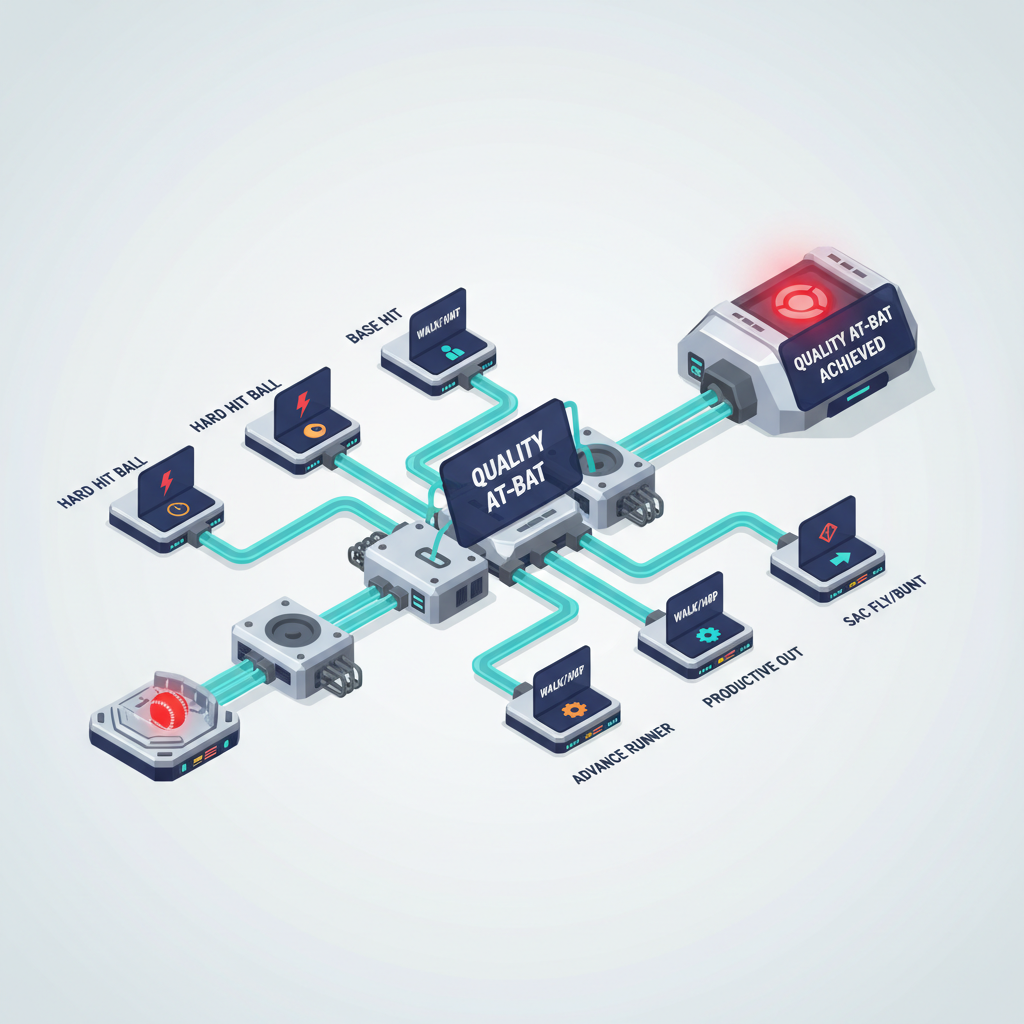
| Quality At-Bat (QAB) | Whether an at-bat was productive, regardless of outcome |
Pitching Stats
The mound numbers. How to measure pitcher effectiveness and track workload for arm safety.
| Stat | What It Tells You |
|---|---|
| Earned Run Average (ERA) | Runs allowed per game equivalent |
| Pitch Count | Total pitches thrown in a game |
| Strike Percentage | Proportion of pitches that are strikes |
Fielding Stats
The defensive numbers. How to measure fielding reliability and contribution.
| Stat | What It Tells You |
|---|---|
| Fielding Percentage | Rate of successful defensive plays |
| Errors (E) | Mistakes that allow runners to advance |
Guides: Which Stats Matter and When
Stats mean different things at different ages. A batting average that looks terrible at 14U might be perfectly normal at 10U. These guides help you know what to focus on.
| Guide | Who It's For |
|---|---|
| What Stats to Track at 10U-11U | Coaches of younger competitive players |
| What Stats to Track at 12U | The most competitive age in youth ball |
| What Stats to Track at 13U-14U | Players transitioning to bigger fields |
| Average Baseball Stats by Age | Typical ranges so you know what "good" looks like |
| Using Stats Without Overcoaching | How to use data without killing a kid's love of the game |
| The Coach's Guide to Quality At-Bats | Why QAB might matter more than batting average |
How Stats Connect to Rizzler
Rizzler isn't just a stats reference; it's a stats tracking tool. Score games in the web or iOS app and basic stats calculate automatically on every plan. On the Coach and Club plans, you can import stats from GameChanger or CSV files, and the AI Batting Order reads stats like OBP, OPS, and strikeout rate to generate optimized lineups.
The stats you track feed the AI. The AI builds better game plans. Better game plans lead to better player development.
Frequently Asked Questions
What's the most important stat for a youth baseball coach to track?
It depends on your age group. At 10U-11U, strike percentage and basic contact rates matter more than traditional stats. At 12U and above, OBP and quality at-bats are more useful than batting average alone. The age-by-age guides above break this down in detail.
Should I share stats with my players?
Carefully. At younger ages (10U and below), focus on effort and process, not numbers. At 12U+, share stats that encourage good habits, like QAB percentage, which rewards walks and hard contact rather than just hits.
Does Rizzler track all of these stats?
Rizzler tracks batting stats (hits, at-bats, walks, strikeouts, and more), pitching stats (pitch count, strikes and balls, strike percentage), and basic fielding stats on every plan, and numbers like OPS and ERA are calculated automatically from that scoring data. Advanced stats, reporting, and AI stats analysis are available on the Coach and Club plans.
Bookmark this page for the definitions, and let the app handle the math. Score a game and every stat here calculates itself.