Blog
How to Plan a 3-Game Tournament Weekend
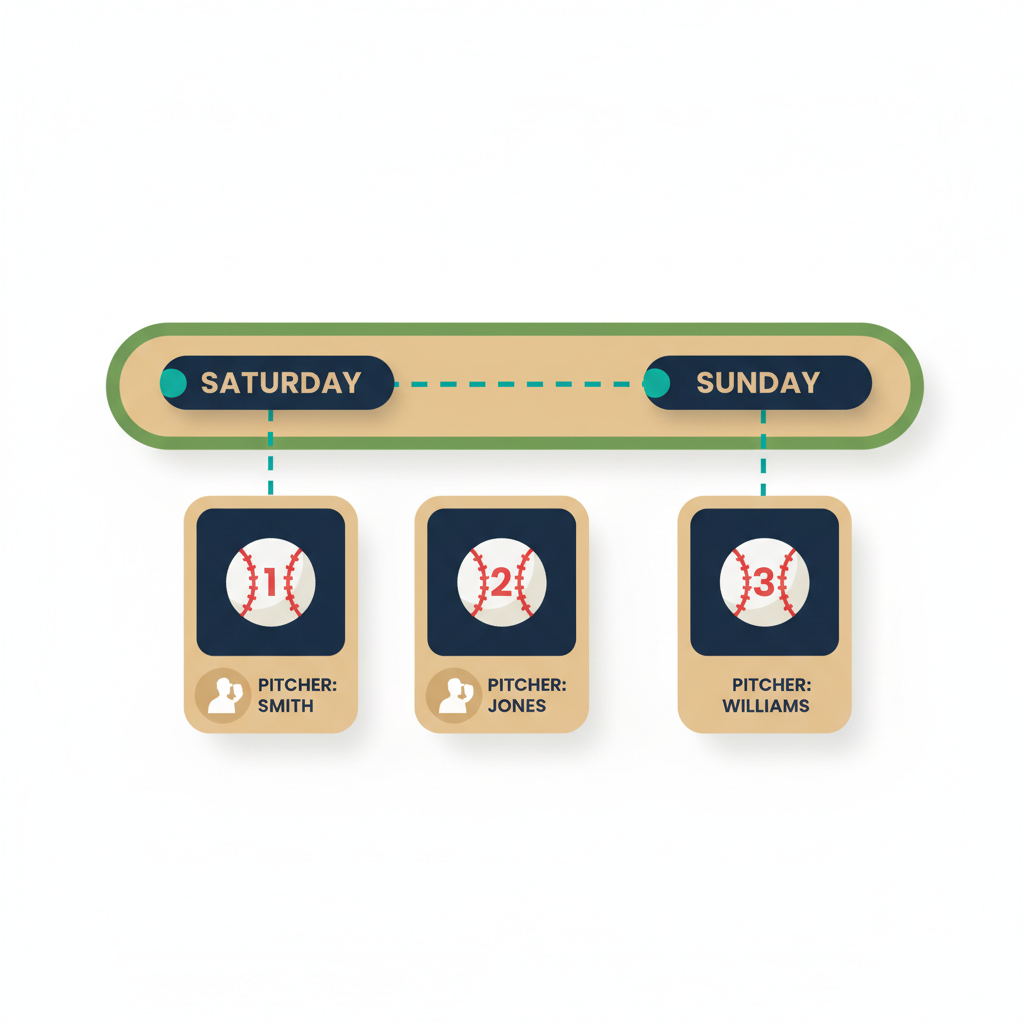
A 3-game tournament weekend, with two pool play games on Saturday and a bracket game on Sunday, is the most common format in youth baseball. The teams that win Sunday aren't the ones with the best player. They're the ones whose coach managed pitching, rest, and lineups across all three games with a plan. Here's how to build that plan before the first pitch.
The 3-Game Framework
| Game | Day | Purpose | Pitching Approach |
|---|---|---|---|
| Game 1 | Saturday morning | Pool play: get a win | Starter A, budget 55-65 pitches |
| Game 2 | Saturday afternoon | Pool play: clinch bracket seed | Starter B, budget 55-65 pitches |
| Game 3 | Sunday morning | Bracket elimination | Starter C, kept fresh on Saturday |
The key decision is game one's pitch budget. Every pitch your ace throws in game one reduces your options for the rest of the weekend.
Pitch Budget Strategy
Conservative approach (recommended for most teams): Cap your game-one starter at 55-65 pitches. This triggers 3 rest days under Little League rules, so that pitcher is done for the weekend and isn't eligible again until Wednesday. That's fine when the event ends Sunday and it protects his arm for the following week. If your bracket can extend to Monday and you want him back for it, cap him at 35 pitches instead: 21-35 pitches means 1 rest day, which makes him eligible Monday. Use your second-best pitcher in game two with the same cap.
Aggressive approach (when you need game one badly): Let your ace go 75-85 pitches to secure a dominant win. This triggers 4 rest days and takes your best pitcher completely out of the weekend. Only do this if losing game one ends your tournament.
Bullpen approach (deep pitching staff): Use 3 pitchers per game, each throwing 25-35 pitches. Nobody triggers more than 1 rest day, and anyone held to 20 or fewer is still available Sunday. More complex to manage, but it keeps the most arms alive for the weekend.
Game-by-Game Planning
Game 1 (Saturday morning): Start your best available arm. Set a pitch count target before the game. Have your reliever ready by the third inning. Tell your starter the plan before the game: "You're going four innings or 60 pitches, whichever comes first."
Game 2 (Saturday afternoon): Your game-one starter is done for the day. Start your second arm. If game one went long and your reliever threw 30+ pitches, that reliever needs rest too, so have a third option ready.
Game 3 (Sunday bracket): This is where planning pays off. If you budgeted correctly on Saturday, you have your third starter fresh plus any Saturday reliever who stayed at 20 pitches or fewer (0 rest days required). If you didn't plan, you're pitching your fourth- or fifth-best arm in the most important game.
Common Mistakes
Burning your ace. Letting your best pitcher throw 85 pitches in game one because "we need to win pool play." Pool play matters, but Sunday's bracket game is the one that counts.
Ignoring the catcher. Your catcher catches 12 innings on Saturday (both games). Sunday, you want to pitch him. That's a violation of the catcher-to-pitcher rule if he caught 4+ innings. Plan catcher rotation alongside pitcher rotation.
No relief plan. Your starter gets knocked around in the second inning of game one. Who comes in? If you haven't decided before the game, you're making a panic decision that affects the entire weekend.
How Rizzler Plans Your Weekend
Enter your three tournament games into Rizzler's tournament planning tool. The planner shows every pitcher's availability across all three games, recalculates after each game based on actual pitch counts, and flags rest day and catcher-to-pitcher conflicts before they become violations.
Between games on Saturday, open Rizzler and see exactly who's available for game two. After Saturday's games, see your Sunday options updated with real data. No spreadsheets, no math, no surprises. See how the tool works.
Frequently Asked Questions
What if we play a doubleheader with only 30 minutes between games?
Back-to-back games require the most aggressive pitching management. Under Little League rules, your game-one starter is done for the day: a pitcher may not appear in a second game on the same calendar day. In leagues that do allow same-day second appearances, pitch counts are cumulative across both games, so plan the day's total, not each game.
How many pitchers should I bring to a 3-game tournament?
Minimum 5, ideally 6-7. Even with good pitch management, you'll likely use 7-9 pitching appearances across three games. Having depth means you're never forced to stretch a tired arm.
Should I sacrifice game one to save pitching for Sunday?
Not usually. Winning pool play improves your bracket seed, which can mean an easier Sunday matchup. The goal is to win game one efficiently: not to sacrifice it, but to win it without exhausting your staff.
Can Rizzler adjust the plan mid-tournament?
Yes. After each game, Rizzler updates pitcher availability based on actual pitch counts from in-game scoring. The plan adjusts in real time.
Planning the weekend before the first pitch is what wins Sunday. The tournament planner is included on the Coach and Club plans, and a free account gets you started.
Talk to our team
Want to spend more time coaching and less time with paperwork? Let's talk.
Tell us about your team and we'll show you how to plan games, set lineups, run the schedule, and develop players in one place, so you spend the season coaching instead of chasing admin.
Less admin, more coaching
Plan games, set lineups, and track the season in one place
Keep every family in the loop automatically
Tell us about your program
4 fields · takes 30 seconds
Lands in the same inbox as the Help button · human response only
Read Next
Quality At-Bats (QAB) Explained for Parents & Players
LearnRule Compliance: Never Violate a Rule You Didn't Know Existed
FeaturesRizzler vs iScore: Coaching App Comparison
ComparisonEquipping Your Little League Coaches with Tools
For LeaguesImport Stats from GameChanger into Rizzler
FeaturesPerfect Game Age Chart 2026: Birthdates & Grad Years
Rules