Learn
How to Build a Batting Order: The Main Approaches
There's no single "right" way to build a batting order in youth baseball. The best approach depends on your age group, competitive level, and coaching philosophy. Here are the four main strategies coaches use, when each works best, and where Rizzler's AI Batting Order fits in.
Approach 1: Traditional (Speed-Contact-Power)
The classic model: fast leadoff, contact second, best hitter third, power fourth, and descending from there.
How it works: Leadoff gets on base with speed and contact. #2 moves runners. #3 is your best overall hitter. #4 drives in runs with power. #5-9 descend in ability.
When to use it: 13U+ travel ball where players have defined roles and you have clear speed/power distinctions.
Limitations: At younger ages, most players don't have distinct speed/power profiles. Putting your weakest hitters 7-9 guarantees they face the pitcher with no one on base, which reduces their development opportunities.
Approach 2: OBP-Based (Modern/Analytical)
Build the order around on-base percentage. Players who reach base most often bat first and second. Players with the highest OPS bat in the middle.
How it works: Sort by OBP for the top third, by OPS for the middle, and balance the bottom third with a "second leadoff" type in the 9-spot.
When to use it: 12U+ competitive play where you have reliable stats from GameChanger or Rizzler scoring.
Why it works: Research consistently shows that OBP correlates more strongly with run production than batting average or speed. This approach prioritizes the stat that actually drives scoring.
Approach 3: Balanced Rotation (Fairness-First)
Rotate the batting order across games so every player bats in every spot over the course of a season. No one is permanently "last."
How it works: Use a rotation system: each game, the order shifts so last game's #1 becomes #2, and so on. Or rotate in blocks (top third, middle third, bottom third) across games.
When to use it: Rec league (any age), 10U and below, any setting where development and fairness matter more than winning.
Why it works: Every kid gets at-bats in high-leverage spots. The kid batting ninth this game bats first next game. Playing time tracking in Rizzler makes the season-long distribution visible and accountable. How to balance playing time →
Approach 4: AI-Generated (Data-Driven)
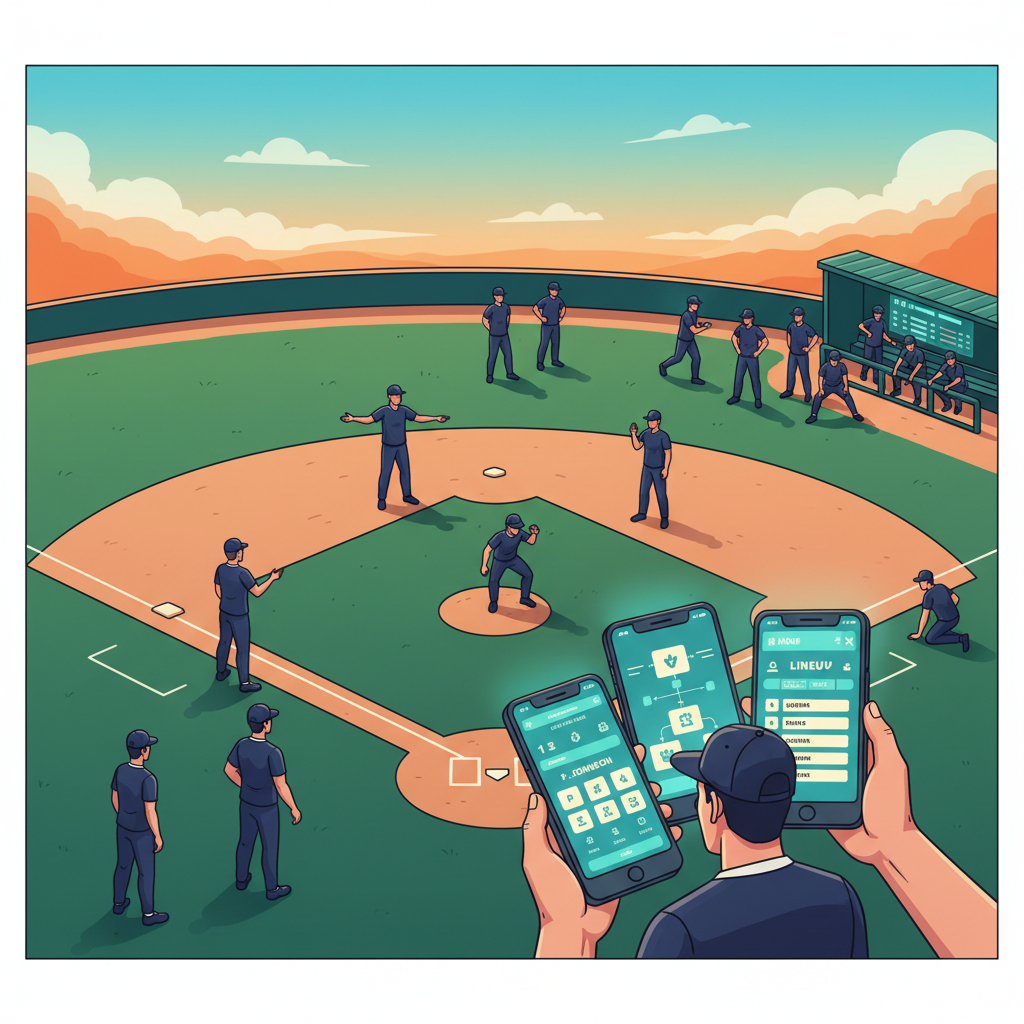
Let Rizzler's AI Batting Order generate the lineup based on your players' actual statistics.
How it works: The AI reads your roster's stats, including OBP, SLG, OPS, strikeout rate, and quality at-bat percentage, and builds an optimized order. Every slot stays editable, so the suggestion is a starting point rather than a final answer.
When to use it: Any time you have enough data (usually 20+ at-bats per player) and want an objective starting point. Available on the Coach and Club plans.
Why it works: The AI considers more variables simultaneously than a coach can mentally process. It produces lineups that reflect actual performance, and then you adjust based on things the data doesn't capture (matchups, confidence, hot streaks).
Which Approach Is Best?
| Age / Level | Recommended Approach |
|---|---|
| 8U-9U Rec | Balanced rotation (everyone bats everywhere) |
| 10U-11U Rec | Balanced rotation with minor optimization (strong contact hitters at top) |
| 10U-11U Travel | OBP-based or AI-generated |
| 12U Competitive | OBP-based or AI-generated |
| 13U-14U Travel | Traditional, OBP-based, or AI-generated |
The Role of Quality At-Bats
Regardless of which approach you use for ordering, consider tracking quality at-bats (QAB) to evaluate how your players perform in their spots. A player who has 4 QABs in 5 at-bats is doing his job, even if he went 1-for-5. QAB shifts the conversation from outcomes to process. Coach's Guide to QAB →
Frequently Asked Questions
Should I use the same lineup every game?
At the rec level, no. Rotate for fairness. At the travel level, consistency helps players settle into roles, but adjust based on pitching matchups and player performance trends.
How does Rizzler's AI decide the lineup?
The AI reads your roster and stats to build an optimized batting order. You review the output and make the final adjustments, slot by slot, before you save the lineup.
Want a data-backed starting point for your next lineup?
Setting a lineup philosophy across a whole club or league? Our team can help.
Talk to our team
Want to spend more time coaching and less time with paperwork? Let's talk.
Tell us about your team and we'll show you how to plan games, set lineups, run the schedule, and develop players in one place, so you spend the season coaching instead of chasing admin.
Less admin, more coaching
Plan games, set lineups, and track the season in one place
Keep every family in the loop automatically
Tell us about your program
4 fields · takes 30 seconds
Lands in the same inbox as the Help button · human response only
Read Next
Tournament Planning for Youth Baseball: The Complete Guide
BlogVolleyball Drills at Home: Solo Work That Actually Transfers
VolleyballSports Team Communication App: RSVP, Alerts, and Reports
FeaturesBest Free Baseball Lineup Generators in 2026
LearnStrikeouts (K): Batting Stat Definition & Youth Context
StatsHow to Plan Pitching Across a Tournament Weekend
Blog